
Quantum mechanics and artificial intelligence might sound like two completely different areas, but they are actually intersecting in fascinating ways. As someone who has spent time exploring both computational methods and the physics that shape our universe, I find the relationship between these fields really eye-opening. Advancements in quantum mechanics are now beginning to influence how AI systems are built, trained, and scaled. In this article, I’ll walk you through how quantum mechanics is already shaping artificial intelligence and why this is a topic you’ll want to keep an eye on.
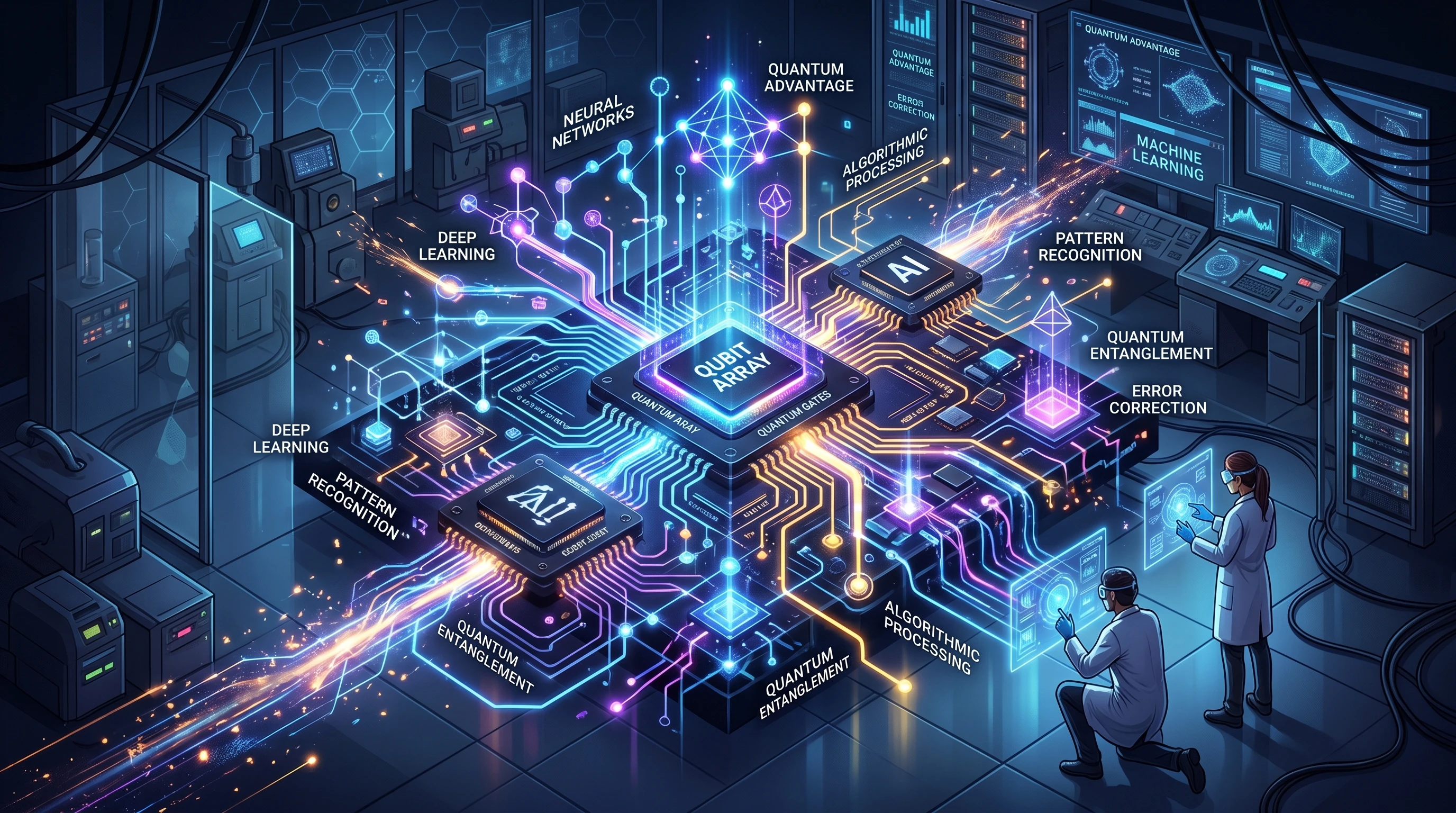
The Basics or How Quantum Mechanics and AI Connect
Quantum mechanics is the branch of physics that deals with tiny particles, such as atoms and subatomic particles, where classical laws break down. Unlike the predictable world of ordinary objects, quantum systems behave in unusual ways, like being in multiple states at once or entangling with other particles so their fates are linked.
AI, on the other hand, is all about building machines or software that can mimic tasks that require human intelligence, from recognizing speech to planning a route to beating the best chess players. Most modern AI relies on a massive amount of data and powerful computers to train large models, which can require a great deal of time and energy.
Quantum mechanics introduces a new type of computer, known as a quantum computer, that can process information in fundamentally different ways. This technology could allow AI algorithms to run much faster and handle problems that are too big for regular computers. For anyone looking to the future of computing, this pairing holds plenty of promise.
Understand Quantum Computing for AI
In traditional computers, information is stored as bits, which are either 0 or 1. Quantum computers use qubits, which can exist in a mix of both 0 and 1 at the same time, thanks to a property called superposition. This means that quantum computers can process lots of possibilities all at once, making them incredibly promising for tasks involving huge datasets or complex optimization.
When applying quantum computing to AI, the major attraction is the speed and scale it can provide. For instance, certain machine learning algorithms rely heavily on searching for the best combination of parameters, which can take classical computers a very long time. Quantum computers could, in theory, find good answers much more quickly, especially for super complex data sets.
- Superposition: The ability for qubits to be in multiple states, letting quantum computers consider many possibilities at once.
- Entanglement: Qubits can become linked so that the state of one directly affects another, offering more sophisticated ways to encode and process information.
- Quantum Gates: Operations that change qubit states in ways regular logic gates can’t, unlocking new styles of information handling.
In a practical sense, these elements provide new ground for AI researchers. They make it possible to represent more complex situations and get results that regular computers just can’t match in feasible timeframes. These features can also let researchers check out patterns in more multifaceted data and make predictions that classical machines might struggle to achieve.
Ways Quantum Mechanics Is Shaping Artificial Intelligence
Bringing quantum mechanics into AI is not just about faster computers. It is also leading to new algorithms and even new ways of thinking about data and intelligence. Here are some areas where quantum mechanics is already starting to make an impact on AI:
- Quantum Machine Learning: Researchers are building machine learning models that use quantum computers to spot patterns in data more efficiently, including tasks like image recognition and natural language processing.
- Optimization Problems: Many challenges in AI, like planning or neural network training, involve searching a huge set of possible combinations. Quantum algorithms, such as the Quantum Approximate Optimization Algorithm (QAOA), may help solve these problems faster than classic algorithms.
- Quantum Inspired Algorithms: Even without a real quantum computer, some researchers make use of ideas from quantum mechanics to create new algorithms that work well on standard computers. These often mimic quantum principles to manage data in creative ways.
AI is also set to benefit as new quantum-inspired mathematical models take center stage. These fresh techniques allow creative ways of approaching old problems, opening up entirely different paths to solutions. For example, researchers have even made progress in building models that simulate quantum circuits for AI purposes using classical frameworks. This switch up brings novel perspectives to stubborn roadblocks in AI.
Why Quantum Computing Matters for AI Progress
From personal experience with training AI models, I know how much computing power is needed for serious projects. The amount of time it takes to train a deep neural network, often running for days or weeks, can slow down progress. This gets even more demanding as people push for larger and smarter systems.
Quantum computing could be an answer to these bottlenecks. If a quantum processor can solve certain AI tasks more quickly, it saves energy, money, and time. This is especially crucial for machine learning models that need to analyze massive sets of numbers or relationships. For instance, quantum computers might help speed up data classification, clustering, or even factorizing huge matrices, all of which are core to today’s AI systems.
One practical example is using quantum computers to speed up linear algebra calculations, the backbone of deep learning. Companies like Google, IBM, and startups such as Rigetti are researching how quantum advantage, the point where quantum computers outperform classical ones, can change machine learning workflows.
Additionally, major organizations are beginning to invest in quantum-aware AI software, signaling that experts expect those super detailed synergies to spark real-world gains soon. These tools are being tested both in academic settings and business environments, showing that more practical applications could be right around the corner.
Challenges and Limits? And What to Watch For?
Like any big jump in technology, combining quantum mechanics with artificial intelligence is not without roadblocks. The field is still in early stages, and several challenges stand out based on both research and hands-on testing:
- Hardware Limitations: Quantum computers are sensitive to their surroundings, needing unique environments just to run. Most quantum computers today are in lab settings; they aren’t yet capable of handling commercial-scale AI tasks.
- Error Rates: Quantum bits are fragile and can easily be disturbed, resulting in errors. Scientists are working on error-correcting codes, but a lot remains to get results that can be trusted for business-critical uses.
- Algorithm Readiness: Many quantum algorithms for AI are still experimental, and putting them into action outside the lab is a serious challenge.
Hardware Limitations
Quantum computers need extremely cold temperatures and protection from external noise. This makes them sizable and expensive to operate. If you are interested in experimenting with quantum computing, you’ll likely use cloud access to quantum processors from companies like IBM and Microsoft. Even in those cases, the devices can only run small problems for now.
Error Rates
The state of qubits can be disturbed by minimal amounts of heat, light, or vibration—this is called “decoherence.” While classic computers are usually reliable, quantum bits can lose information rapidly. There is ongoing progress in error correction, but high error rates still limit what you can achieve with current technologies.
Algorithm Readiness
Researchers are quickly creating new quantum algorithms for machine learning, but it will take more time until these are widely available and easy to use. Getting solid value out of quantum AI will take progress in both software and hardware together.
With these hurdles, expectations need to be realistic. However, none of these barriers have stopped teams around the world from experimenting, and every year, the community is able to set new records and make discoveries that move the field forward.
Advanced Approaches? Moving Toward Quantum AI
For those excited by the challenge, some advanced strategies are already in the works. These include hybrid systems and new methods to fuse quantum and classical computing.
Hybrid QuantumClassical Algorithms: Most machine learning models are still too large for quantum computers alone. Instead, researchers split the work, letting classical computers crunch much of the data and reserving quantum routines for steps where they deliver the biggest benefit.
Data Encoding: Quantum computers need information transformed into quantum states—an approach quite different from regular computers. Finding effective encoding is one of the hottest research topics, as this step decides how much value quantum acceleration will provide.
Quantum Neural Networks (QNNs): These networks mirror how a classical neural network works but use quantum operations for their layers and activations. QNNs have not yet outperformed classic networks in daily use, but they could prove essential as quantum hardware improves.
Some teams are also mapping out new methods to use quantum optimization in reinforcement learning, where AI systems learn from interacting with their environment. Early tests point to improved efficiency and new types of generalization that weren’t feasible before quantum resources entered the equation. This is another promising direction for future research.
RealWorld Examples and Future Potential
I’ve followed several encouraging developments where quantum mechanics is starting to influence AI research:
- Google’s work on “quantum supremacy” showed that a quantum processor could complete a specific calculation far faster than classical computers. While this wasn’t an AI task, it demonstrated the speed possibilities for comparable problems.
- IBM is investing in quantum machine learning libraries, making resources like Qiskit open to the public for creating and testing quantum algorithms on real hardware.
- Volkswagen and DWave have teamed up to build quantum algorithms for traffic flow optimization, an AI goal essential for smart cities and self-driving vehicles.
Major academic institutions are also rolling out special programs and hackathons to train the next generation of scientists and engineers in quantum AI development. Public and private sector collaboration is creating new momentum and setting the stage for breakthroughs, so anyone interested in these fields should keep checking in on the latest news and findings.
Frequently Asked Questions
Here are questions I’ve come across from others getting started with quantum mechanics in artificial intelligence:
Question: Do I need a quantum computer to work on quantum AI?
Answer: Not always. Many quantum inspired algorithms run on normal hardware. For hands-on quantum computing, cloud platforms let you access smaller quantum processors for hands-on learning and safe experimentation.
Question: What’s the difference between quantum machine learning and classical machine learning?
Answer: Quantum machine learning aims to use quantum systems to deal with data or solve problems more efficiently or in new ways compared to regular computers. At present, classical machine learning is much more accessible. Still, quantum techniques could provide substantial new powers as hardware and algorithms mature.
Question: Can quantum AI boost deep learning?
Answer: Quantum computers might help speed up tasks like training deep neural networks, especially as the scale and complexity of models grow. This kind of research is ongoing and is expected to expand with advancements in quantum technology.
Looking Ahead? Why Quantum AI Is Worth Watching
Based on personal experience with AI and close observation of quantum research, the field is getting set to remake the way complex problems are cracked. As quantum hardware and algorithms grow, the link between quantum mechanics and artificial intelligence will very likely pave the way for insights far beyond current boundaries. For anyone with an interest in technology, it’s an exciting time to keep an eye on the new research and tools coming from this intersection. Even if quantum AI has not yet become mainstream, the earliest applications and findings are beginning to shape the future of designing and working with intelligent systems. Staying informed can open up new opportunities and help you be ready for the next wave in computing.