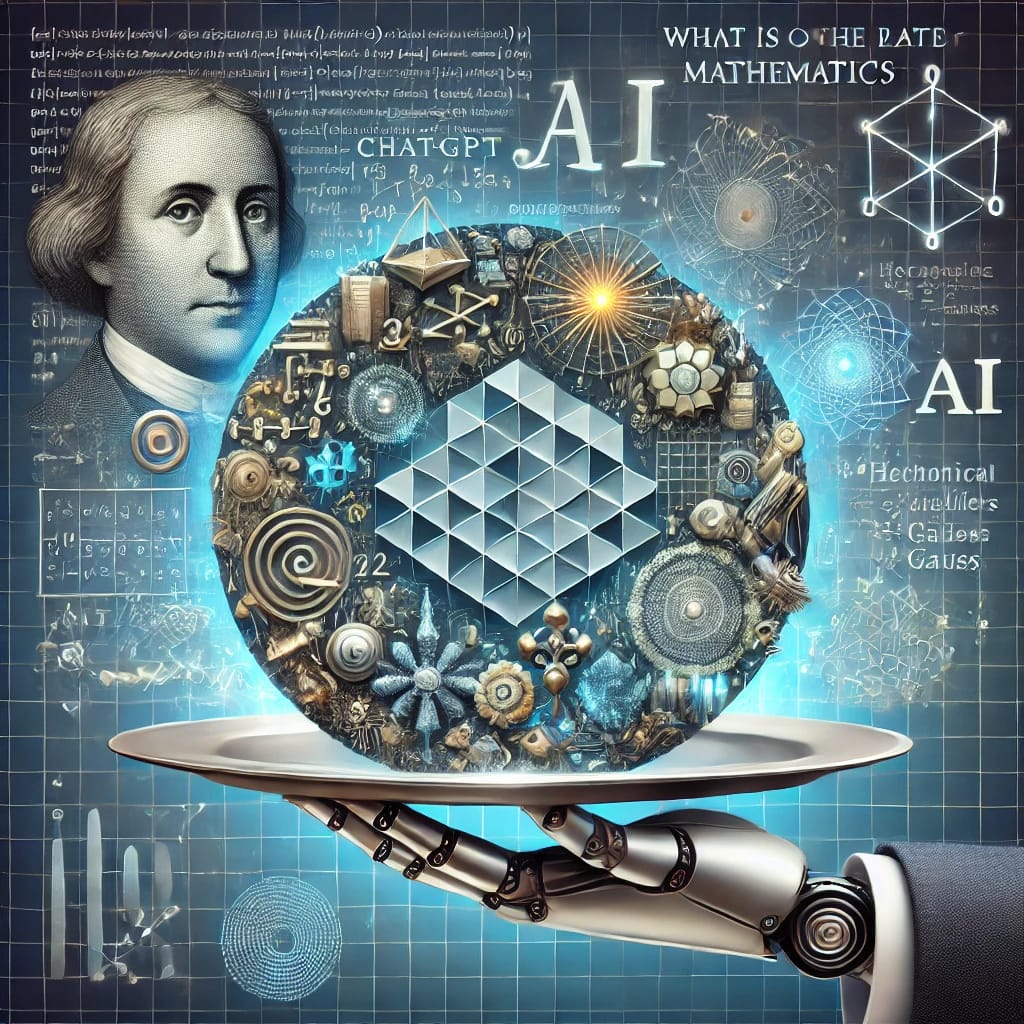
What are patterns, and what are they used for in Artificial Intelligence?
Patterns are like the blueprints that help AI understand and make sense of complicated data. They let AI systems spot connections and guess what might happen next, all by looking at what’s already been done.
In this teamwork, we don’t just get insights from our own heads; we also learn by working together with data and algorithms. So, really understanding things goes beyond who owns the information, showing us a shared space where knowledge keeps growing.
⚡ When Patterns Click (and Nobody Quite Knows Who Did It)
There used to be a satisfying story about thinking.
You’d climb a ladder (courtesy of Benjamin Bloom) from remembering to understanding to creating, like a well-behaved intellectual mountaineer. At the top: insight. A crisp “aha.” A moment you could almost frame and hang on the wall.
Then along came AI and quietly ruined the narrative.
Not dramatically. Not with rebellion or consciousness.
Just by… producing insights without ever having one.
🧠 The Human Version? Drama Included
A human insight is a small event.
There’s tension. Confusion. A vague sense that something doesn’t quite fit. Your mind circles the problem like a dog refusing to lie down.
And then… click. Something aligns. You feel it:
- a release
- a shift
- a strange certainty
It’s not just that you found the answer.
It’s that you felt the transition from not-knowing to knowing.
That feeling? That’s your signature.
⚙️ The AI Version? No Fireworks, Just Output
Now consider AI.
Same situation: complex input, unclear structure.
And then… answer.
Also a “click,” from the outside.
But internally?
No circling.
No tension.
No moment.
Just: pattern → probability → output
No awareness of:
- having been wrong
- having struggled
- having arrived
If humans have “aha,” AI has… “result.”
🌉 The Strange Convergence
And yet… here’s the twist.
You read something generated by AI…
and suddenly you have the aha.
So what just happened?
Did the machine have the insight?
No.
Did you generate it entirely alone?
Also no.
What actually occurred was something more interesting: the pattern clicked between you
🧬 Insight, Rebranded
We like to think of insight as something owned.
“My idea.”
“My realization.”
But in this new landscape, it’s starting to look more like:
a pattern reaching stability
across a system that includes both human and machine
You bring:
- awareness
- feeling
- meaning
AI brings:
- scale
- variation
- rapid pattern assembly
And somewhere in that exchange… click
⚡ The Misleading Simplicity of “Conclusion”
Here’s where language betrays us.
We say both humans and AI “conclude.”
But a human conclusion is:
- a commitment
- a belief
- something that reshapes how you see the world
An AI “conclusion” is:
- a statistically likely continuation
No commitment. No belief. No stakes.
Just… completion.
🌫️ The Disappearing Center
So where does insight live now?
Not fully in you.
Not in the machine.
But in the interaction.
A kind of cognitive overlap where:
- patterns are proposed
- recognition happens
- meaning ignites
Like striking flint:
- one side alone doesn’t spark
- together, something happens
🪞 A Slightly Uncomfortable Thought
If insight can be triggered externally…
assembled collaboratively…
distributed across systems…
Then maybe it was never as “individual” as we thought.
Maybe even before AI, your insights were:
- shaped by language
- inherited from culture
- built on others’ ideas
AI just made that… obvious.
✨ Final Click
So here we are.
Humans, still having aha moments.
Machines, still having none.
And yet, together, producing more moments of clarity than either alone.
Not because AI understands.
Not because we’ve lost something.
But because: when patterns click,
they don’t always belong to the one who feels them.
And maybe they never did.