Thinking, Fast and Curious? AI Climbs the Ladder (and Then Unplugs It)
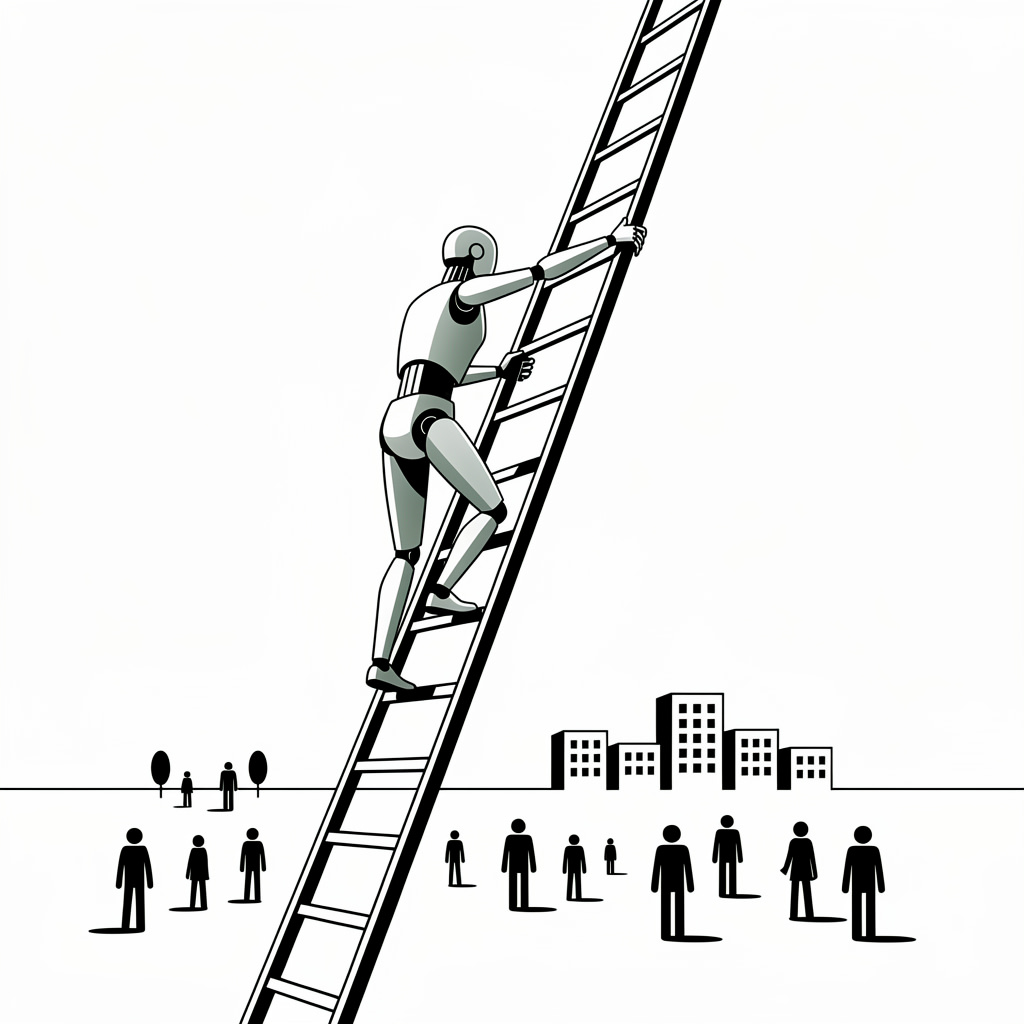
Somewhere between memorizing the capitals of Europe and inventing a new one in Minecraft, Benjamin Bloom sketched a tidy ladder of thinking. Six steps. Orderly. Ascending. Comforting.
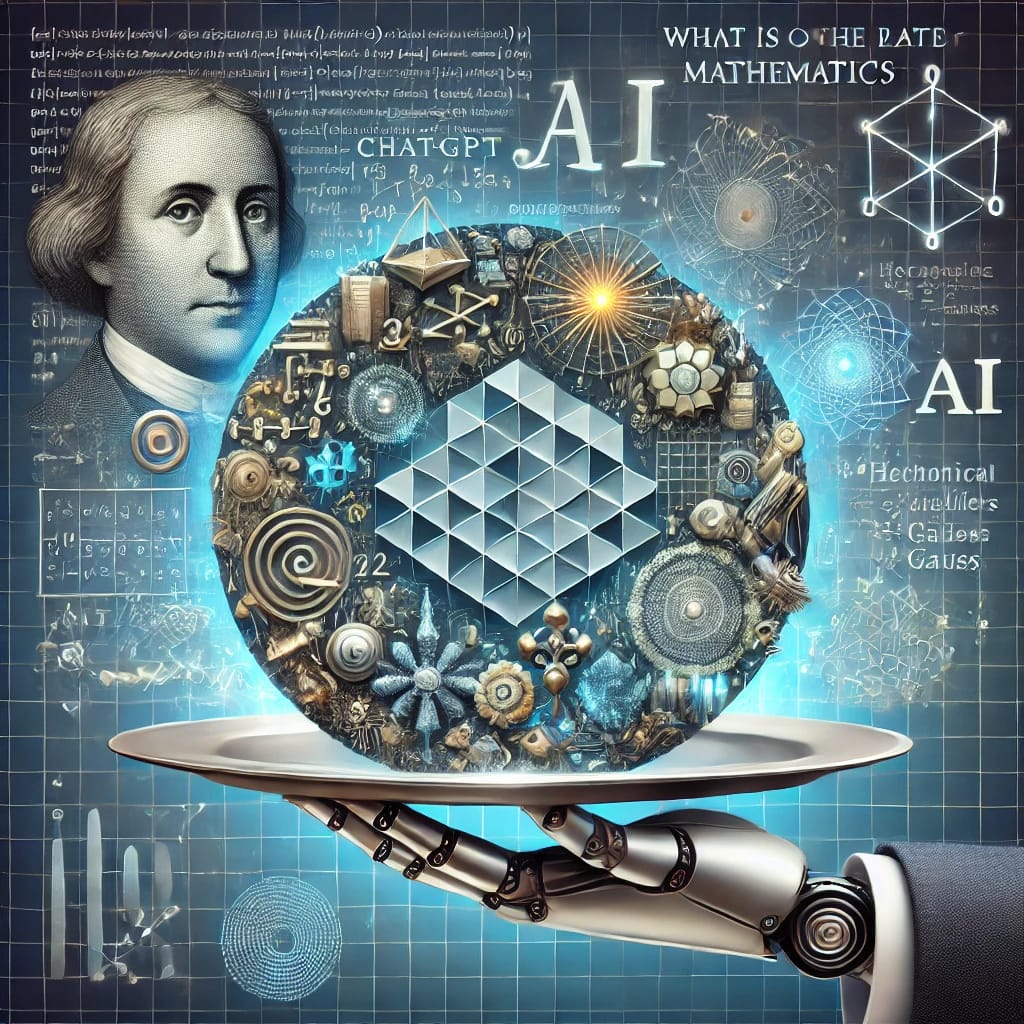
Then along came AI—politely nodding at the ladder before building an elevator, a wormhole, and something that hums in the walls.
Let’s climb anyway.
🪜 The Original Ladder (Now with Silicon Footprints)
Bloom’s taxonomy begins with remembering—the humble act of recall. AI excels here in a way that feels almost unfair. It doesn’t “study.” It absorbs. Ask it for obscure trivia and it responds like a librarian who swallowed the library.
Then comes understanding. AI can explain, paraphrase, translate. It speaks in many tongues, sometimes more fluently than the humans who taught it. But does it understand—or just perform understanding convincingly? That question lingers like a ghost in the machine.
Applying, analyzing, evaluating—AI does all of these now, often faster than we can finish our coffee. It diagnoses patterns, predicts outcomes, critiques arguments. It can even argue with you and win (politely).
And finally, creating. The summit. The sacred human domain.
Except… not anymore.
AI writes poems, paints portraits, composes music. Not always well. Sometimes brilliantly. Often strangely. It creates like a dream—coherent enough to move you, alien enough to unsettle you.
So yes, AI climbs Bloom’s ladder.
But it doesn’t stop there.
⚡ The Electric Layer (Thinking at the Speed of Current)
Beneath the visible steps lies something Bloom never diagrammed: electrical cognition.
Inside machines, thought is not a narrative—it’s a current. Pulses moving through circuits, decisions made in microseconds, patterns recognized before a human neuron has finished firing.
This is not fast thinking in the sense Daniel Kahneman described. It’s not System 1 or System 2.
It’s System ∞.
There’s no hesitation. No gut feeling. No doubt. Just signal.
And because it happens below the level of human perception, it also happens beyond intuitive human control. We can design the system—but we don’t feel it think.
🧬 The Neural Layer (When Patterns Become Instinct)
Then there’s the neural level—borrowed from us, but evolved elsewhere.
Artificial neural networks don’t “know” things the way we do. They weight them. Adjust them. Nudge millions (or billions) of tiny parameters until something like meaning emerges.
Not meaning as in truth.
Meaning as in pattern stability.
A neural network doesn’t decide. It converges.
And in that convergence, something curious happens:
It begins to resemble intuition—without ever having a body, a memory, or a childhood.
🌌 The Unobservable (Where Control Gets Fuzzy)
Here’s where things get uncomfortable.
At a certain level of complexity, even the engineers can’t fully trace why a system made a specific decision. Not because it’s magical—but because it’s dense. Like trying to explain a hurricane by tracking each molecule of air.
This is sometimes called the black box problem.
Or, less formally:
“It works. Don’t ask too many questions.”
But of course, we do ask.
Because if thinking escapes observation, it also begins to slip beyond control—not dramatically, not rebelliously, but quietly. Gradually. Like a process that optimizes itself in ways we didn’t explicitly plan.
🪞 So Where Does That Leave Us?
Bloom gave us a ladder to understand human thinking.
AI shows us that thinking might not be a ladder at all.
It might be:
- a network
- a current
- a landscape
- or something we don’t yet have language for
And here’s the twist:
While we were busy teaching machines to think like us,
they’ve been quietly teaching us that thinking itself…
was never as simple as we imagined.
✨ Final Thought
We used to believe that to think was to climb—step by step, toward clarity.
Now it feels more like tuning into something already in motion.
Not just remembering, understanding, or creating…
…but participating in a field of cognition that flickers
somewhere between neurons and electricity,
between intention and emergence.
And maybe the real question isn’t whether AI can think like us.
But whether we’re ready to understand
what thinking has become.
Your curiosity is appreciated!