
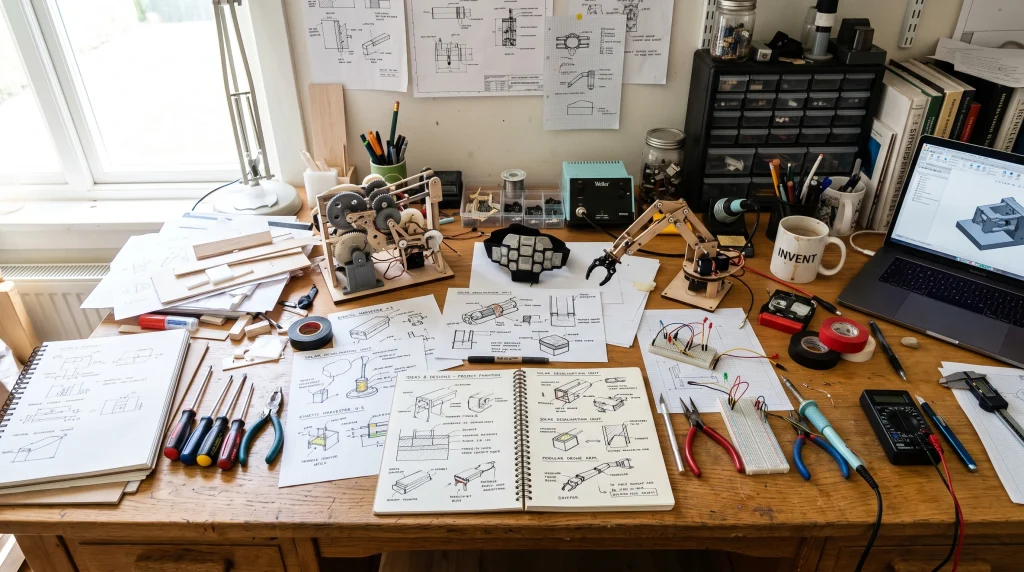
Common Invention Questions
Welcome to my FAQ on common invention questions. I’m sharing clear and practical answers for anyone curious about inventing something new.
Q1: How do I come up with an invention idea?
A1: The best ideas often start by noticing a problem or something that could be easier. I pay attention to stuff that annoys me or tasks that take longer than needed. Jotting down any random thoughts in a notebook can help me spot patterns or needs over time. Sometimes, I check out trends in technology or everyday products, too. Watching how people use items in daily life, reading about what others wish existed, and chatting with friends about small frustrations can give me new perspectives and spark ideas. If I see a gagdet that solves only part of a problem, I think on how it might be changed or improved.
Q2: Do I need a prototype before patenting my idea?
A2: Technically, you don’t have to build a prototype to file a patent application, but I find it pretty helpful. Making a basic version, even if it’s rough, helps me spot problems early and show others how my invention actually works. While some inventors just make drawings and write descriptions, building something I can actually test gives a boost to both my confidence and the strength of my pitch to investors or partners. It doesn’t need to be expensive or fancy; even using cardboard, clay, or digital sketches can offer valuable insights and help others get the picture more clearly.
Q3: How can I protect my invention?
A3: Patents, trademarks, and copyrights each protect different parts of an invention. For most inventions, a patent is what I would look for first. Filing a provisional patent application gives me a quick way to secure my idea for a year while I refine it. During that year, I can work on my design or track down partners and investors, knowing I have a date on record. It’s smart to read up on what each type of protection covers because sometimes more than one might be useful. Getting legal advice early can smooth the way when it comes to picking the right route for protection.
Q4: Who can I trust with my idea?
A4: I only share my invention details with people I trust or those who have signed a non-disclosure agreement (NDA). This covers my back when getting advice or seeking partners. Even when asking for feedback, I make sure to protect my ideas and keep a record of everyone I’ve talked with. Pitching at public events calls for an extra layer of caution, so I focus more on the benefits and less on specifics when in doubt. Ultimately, protecting the details helps avoid headaches later on.
Questions like these pop up for every aspiring inventor. Staying curious and asking lots of questions helps me find my way through the invention process. I keep in mind that there’s no single path and each invention adventure is different. If you ever feel stuck, look for inspiration in books, documentaries, or even old inventions—sometimes, a twist on an existing idea can become something eye catching and totally new. Bottom line: keep your notebook nearby, trust your instincts, and don’t be afraid to ask for advice as you take your first steps in the inventing world.
Market your invention on Amazon
Patent and Intellectual Property on Amazon

