
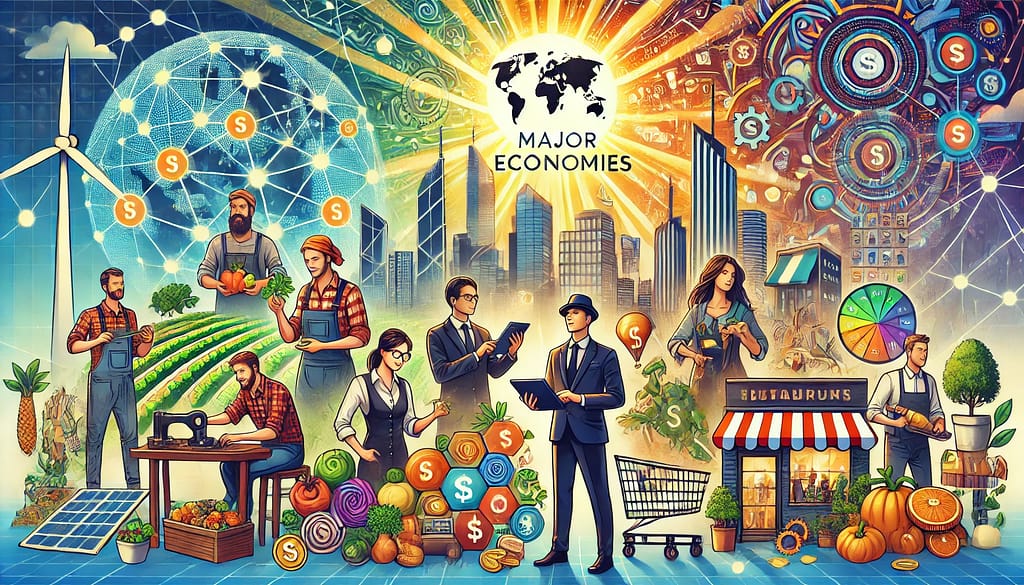
Major Economies Concept by Keyu Jin
The “Major Economies” Concept by Keyu Jin by Investing in Local Businesses and Improving Success
Keyu Jin, a prominent economist and professor at the London School of Economics (LSE), has emerged as a leading voice in the discourse on global economics, particularly in relation to China’s rapid development and its unique economic model. One of her most compelling ideas is the notion of what she refers to as “major economies,” which emphasizes the importance of investing in local businesses and fostering their success as a cornerstone for sustainable economic development. In this article, we will delve into the principles underpinning her concept, explore its practical applications, and analyze its potential impact on both national and global economies.
1. The Concept of “Major Economies”
At the heart of Keyu Jin’s framework is the belief that sustainable economic growth is best achieved by nurturing the foundational pillars of an economy—its local businesses and industries. Unlike traditional macroeconomic approaches that focus on large-scale investments, global trade, or top-down industrial policy, Jin argues for a model that prioritizes the development of what she calls “major economies” within countries. This refers to a focus on:
- Empowering Small and Medium Enterprises (SMEs): SMEs are often referred to as the backbone of many economies. By investing in these businesses, governments and policymakers can stimulate innovation, create jobs, and enhance economic resilience.
- Local Consumption and Production: Jin highlights the importance of fostering a self-sustaining economic cycle in which local production meets local consumption needs. This reduces dependence on external markets and increases economic stability.
- Targeted Investment in Key Sectors: Jin advocates for prioritizing investments in industries that have the potential to drive long-term growth and success, such as technology, green energy, and education.
- Removing Barriers to Success: Creating an environment where businesses can thrive by reducing bureaucracy, offering financial support, and investing in infrastructure is essential to Jin’s vision.
2. Keyu Jin’s Focus on Local Business Success
Jin’s approach is rooted in her deep understanding of China’s economic transformation, where local businesses and entrepreneurs played a pivotal role in the country’s rise to global prominence. Her concept of “major economies” reflects three key ideas:
2.1 Nurturing Entrepreneurial Ecosystems
Jin emphasizes that successful economies rely on vibrant entrepreneurial ecosystems. These ecosystems foster innovation and competition, which are essential for driving productivity and economic growth. Governments can create these ecosystems by investing in education, providing access to capital, and ensuring legal protections for small businesses.
For example, China’s transformation from a largely agrarian economy to a technological powerhouse was fueled by policies that encouraged entrepreneurship. Startups and local firms, such as Alibaba and Huawei, benefited from supportive government policies and investments in infrastructure. These companies not only created millions of jobs but also drove technological advancements that boosted productivity across various sectors.
2.2 Encouraging Domestic Demand
Jin argues that economies that rely too heavily on exports are vulnerable to global market fluctuations. Instead, she advocates for a shift toward domestic consumption as a driver of growth. By investing in local businesses that cater to domestic needs, economies can reduce their reliance on volatile global markets and create a more stable growth trajectory.
China’s pivot toward domestic consumption is an example of this principle in action. In recent years, the Chinese government has implemented policies aimed at boosting domestic spending, such as improving social safety nets and increasing wages. Local businesses, in turn, have flourished by catering to the growing middle class.
2.3 Tackling Inequality Through Local Investment
One of Jin’s most compelling arguments is that investing in local businesses can help address economic inequality. Large multinational corporations often concentrate wealth in urban centers and developed regions, leaving rural areas and smaller towns behind. By investing in local economies, governments can create opportunities for marginalized communities and ensure more equitable wealth distribution.
Jin points to initiatives such as microfinance programs, which have empowered small business owners in developing countries to achieve financial independence and contribute to their local economies. These programs demonstrate how targeted investments can have a transformative impact on both individual livelihoods and the broader economy.
3. The Impact of Major Economies on the Global Economy
Jin’s concept of “major economies” has significant implications for both national and global economic dynamics. Here are some of the key impacts:
3.1 Economic Resilience
By focusing on local businesses and self-sustaining economic cycles, countries can reduce their dependence on external markets. This makes them less vulnerable to global economic shocks, such as trade wars, supply chain disruptions, or financial crises. For example, during the COVID-19 pandemic, countries with robust local supply chains were better able to weather the storm compared to those reliant on international trade.
3.2 Innovation and Productivity
Local businesses often serve as incubators for innovation. By investing in these enterprises, countries can stimulate technological advancements and improve productivity. This has a compounding effect on the broader economy, as new technologies and business practices spread to other sectors.
3.3 Reduced Inequality
The emphasis on local businesses and regional development helps bridge the urban-rural divide and reduces economic disparities within countries. This creates a more inclusive growth model that benefits a wider segment of the population.
3.4 A Shift in Global Power Dynamics
If more countries adopt Jin’s approach, the global economy could see a shift away from the dominance of multinational corporations and export-driven growth models. Instead, the focus would shift toward decentralized economic systems where local businesses play a more prominent role. This could lead to a more balanced distribution of economic power and reduce the influence of a few dominant players.
4. Real-World Applications and Challenges
While Jin’s ideas have the potential to revolutionize economic policy, implementing them comes with challenges:
- Financing Local Businesses: Many local businesses struggle to access capital, particularly in developing countries. Governments and financial institutions must find innovative ways to provide affordable financing.
- Balancing Globalization and Localization: While investing in local businesses is important, countries cannot ignore the benefits of global trade and investment. Striking the right balance between globalization and localization is key.
- Overcoming Structural Barriers: Bureaucracy, corruption, and inadequate infrastructure can hinder the success of local businesses. Addressing these structural barriers requires sustained effort and political will.
5. Conclusion? A Path Toward Inclusive Growth
Keyu Jin’s concept of “major economies” offers a compelling vision for the future of economic development. By investing in local businesses and fostering their success, countries can build resilient economies that prioritize innovation, reduce inequality, and create sustainable growth. While challenges remain, Jin’s ideas provide a roadmap for policymakers seeking to create a more inclusive and equitable global economy.
As the world continues to grapple with the challenges of globalization, inequality, and environmental sustainability, Jin’s emphasis on local businesses and regional development serves as a timely reminder of the importance of grassroots economic empowerment. Her work underscores the need for a shift in economic thinking—one that places the success of local communities at the center of global progress.
Shop tips
Movers and shakers on Amazon
Your curiosity is appreciated!
Make your own inventive corner
Ready to start your own website and share your passion with the world? Join me and unlock step-by-step training to build your online presence just like I did! Use my links if you want me as your coach!