
Quantum Physics For Beginners By Understanding The Basics
Quantum physics is one of those topics that sounds super complicated, but it’s actually pretty fascinating once you get a handle on the basics. If you ever wondered how atoms behave or why light can act like both a wave and a particle, you’re dipping your toes right into the world of quantum. I’m breaking down the beginner-friendly concepts here, so you can start exploring this weird and wonderful corner of science with confidence.
Quantum Physics is The Science of the Very Small
Quantum physics, sometimes called quantum mechanics, deals with how tiny particles like atoms and electrons behave. Classic physics (think Isaac Newton and gravity) works great for things like cars, planets, and basketballs. But the rules get kind of wild when you shrink things down to the atomic scale.
The quantum world is full of surprises. Particles don’t follow straight paths, and sometimes they even seem to be in several places at once. Quantum physics explains a lot of stuff that doesn’t really fit with what we see in everyday life, but it’s the foundation for much of modern technology, such as lasers, solar panels, and the smartphones in our pockets.
Scientists first started to uncover these weird rules in the early 1900s. Max Planck and Albert Einstein are two names you might see a lot; they kicked off this field by showing that energy comes in tiny packets, not smooth streams. Fast forward a bit, and you get quantum mechanics. It’s now one of the most tested and successful theories in science today.
Quantum Building Blocks. The Basics Explained
If you want to dig into quantum physics, it helps to know a few key terms and ideas:
- Atoms: Tiny building blocks that make up everything around us. Each atom has a nucleus (with protons and neutrons) and electrons spinning around it.
- Quanta: Super small packets of energy. The word “quantum” actually means a single packet of something.
- WaveParticle Duality: Light and electrons can act like both waves (ripples) and particles (tiny dots), depending on how we look at them.
- Uncertainty Principle: There’s a natural “fuzziness” in the quantum world; you can’t perfectly measure certain pairs of things, like an electron’s speed and position, at the same time.
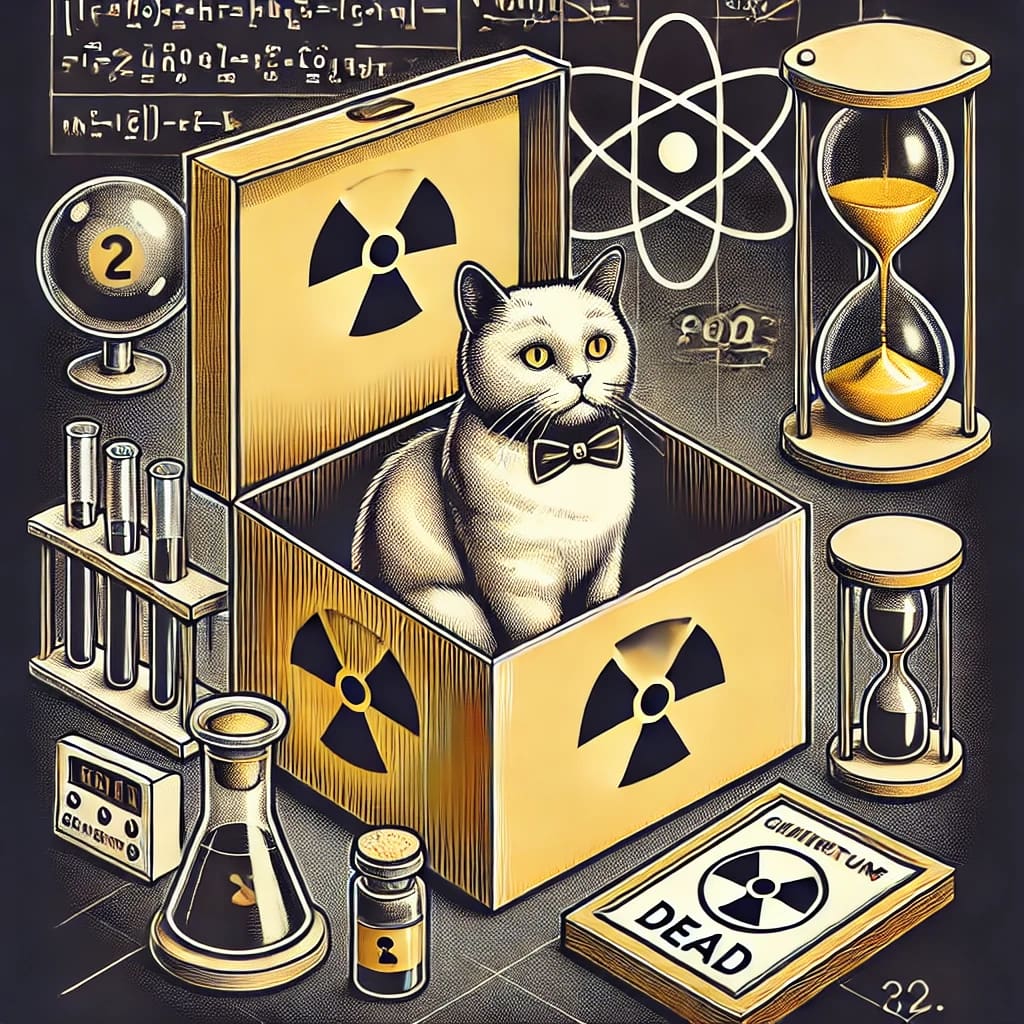
- Superposition: Particles can exist in multiple states at the same time, at least until you measure them. This is what makes quantum physics so mind-bending.
Once you have a grip on these words, the rest starts falling into place a lot more quickly. It’s a good idea to check out some simple diagrams and animations online that go with each of these concepts. They help give a visual sense to what can otherwise feel abstract.
Get Started with Quantum Physics, Simple Concepts and Cool Experiments
Most beginners get introduced to quantum physics with a few famous experiments and ideas:
- The Double Slit Experiment: When scientists shoot light or electrons through two small slits, they get an interference pattern, like you’d see with waves. But if you check which slit they go through, they start acting like particles. This shows that observation matters in quantum physics.
- Photoelectric Effect: When light hits a metal surface, it can kick out electrons. This only happens if the light has enough energy per “packet” (photon), not just more brightness. Albert Einstein explained this, earning a Nobel Prize for the idea.
- Energy Levels: Electrons in atoms don’t just orbit anywhere they want, they “jump” between certain levels. This explains why neon signs glow in those bright colors and why metals give off different colors in fireworks.
Trying these out in a high school physics classroom or just seeing a demo video online is a solid way to get a feel for what’s going on. Many museums or science centers also have interactive exhibits that demonstrate these effects if you want to see them up close.
Challenges of Wrapping Your Head Around Quantum Theory
Most people find quantum physics tricky at first because it just doesn’t match up with what you see around you day to day. Here are a few of the more common hurdles, with some ways to work through them:
- Nothing Acts How You Expect: Tiny things don’t obey the usual rules. Expect a few surprises along the way.
- Probability Takes Center Stage: Instead of saying exactly where a particle is, you often just get a set of chances or probabilities. It’s less about certainty and more about likelihood.
- Abstract Math: A lot of quantum relies on equations and math tools that aren’t instantly intuitive. While jumping into the math isn’t required for understanding the big ideas, a basic sense of how equations describe nature can help a lot.
- Serious Vocabulary: Words like “entanglement” and “wavefunction” sound more like science fiction at first, but with a few real world examples, you’ll spot these terms all over the place.
Not everything will make sense right away, and that’s completely normal. Even some of the smartest scientists in history struggled to wrap their heads around quantum ideas when they first encountered them.
Mental Roadblocks and How to Get Past Them
Most confusion comes from trying to force quantum physics to fit with regular, everyday experience. The more you let yourself think outside the box, the more sense it starts to make. Here are some good ways to get past the weirdness:
- Check out short videos or visual animations that show quantum effects in action; they give you an idea of what’s happening without the heavy math.
- Use analogies, like thinking of energy levels as rungs on a ladder, even though that’s not a perfect match.
- Focus on what quantum explains: why lasers work, how computers store information, and how things like MRI machines create images.
- Talk about ideas with friends or on forums; explaining something out loud often helps it click.
Some people also enjoy science fiction books and movies inspired by quantum principles. They might not always get everything right, but they can make the learning process more vivid and exciting.
Practical Examples of Why Quantum Physics Matters
Here’s the cool thing; quantum physics isn’t just for scientists in labs. A lot of stuff we use every day runs on quantum principles:
- LEDs and Lasers: The colors your TV or phone screen can show all rely on electrons jumping between energy levels, releasing light packets.
- Semiconductors and Microchips: Every computer and smartphone out there works because of quantum ideas about how electrons move in materials.
- Magnetic Resonance Imaging (MRI): Hospitals use MRI machines to see inside your body, using the quantum spin of atoms in your tissues.
- Solar Panels: These use photons (light particles) hitting a material to knock electrons loose, creating electricity; a direct photoelectric effect in action.
- Quantum Cryptography: For super secure communication, new quantum tech makes it nearly impossible for hackers to intercept messages without being detected. This is hitting the world of internet security in a big way.
- Quantum Computing: Traditional computers process info in bits (ones and zeros), but quantum computers use qubits, which can be in multiple states at once due to superposition. This could eventually let us solve problems that would take ordinary computers millions of years.
Getting even a basic sense of quantum physics means you start to see all the hidden science powering the modern world. Plus, you’ll notice news stories about quantum technology breakthroughs with a whole new perspective.
Frequently Asked Questions
Here are a few questions that come up whenever I talk with beginners about quantum physics:
What’s a quantum leap, really?
Although the phrase gets used to mean a big jump, a real “quantum leap” is actually a super small jump; an electron moving from one energy level to another. It’s a basic, but important, transition in the quantum world.
Is quantum teleportation real?
Quantum teleportation is about transferring information (like the state of a particle), not moving matter from one spot to another Star Trek style. Scientists have done this with photons using entanglement, but nothing involving people or objects.
Can quantum physics predict anything with certainty?
No, quantum physics always gives probabilities, not definite outcomes. If you measure where a particle will show up, you only get a set of odds, kind of like rolling loaded dice.
Do I need advanced math to learn the basics?
Not at all. While the deep down details of quantum mechanics do use heavy math, most beginner concepts can be picked up with simple logic and a bit of curiosity.
How to Take Your First Steps in Quantum Physics
If you’re interested in learning more, here’s how I suggest you start:
- Look for books written for beginners; titles by Brian Greene or Carlo Rovelli are easy to digest and pretty engaging.
- Watch short YouTube visual explainers that break down experiments or key ideas.
- Try online courses, like the ones from Khan Academy or edX, which start really basic and build from there.
- Dig into examples with real tech; see how things like LEDs or lasers at home use quantum principles every day.
- Find documentaries or podcasts where scientists talk about their discoveries and experiments. Hearing the excitement in their voices makes the subject feel way more alive.
- Visit science museums or virtual labs online, where interactive kits let you experiment with light and optics, bringing quantum ideas closer.
You don’t have to memorize everything or solve equations. Just exploring a few of these areas helps the weirdness start making sense. Quantum physics is a field where just asking “what if?” opens the door to cool discoveries and mind-bending technology.
Learning quantum physics isn’t about having all the answers but about getting curious and comfortable with ideas that break the rules of the everyday world. Whether you stick with the basics or go deeper, stumbling upon quantum makes you see the universe (and even your phone or TV) in a whole new way. The more you explore, the more those strange ideas begin to feel familiar—and even essential in our tech-driven world.
Thank you for reading, shares and comments!